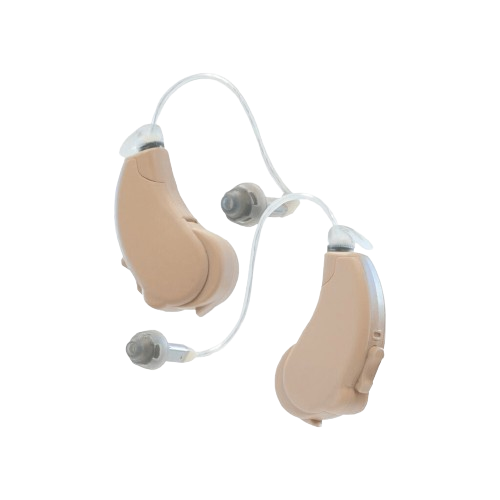
There are a variety of hearing aid types and styles available to best suit a person’s degree of hearing loss, fit preferences, lifestyle needs and physical abilities (such as finger dexterity needed for replacing batteries). Some hearing aid devices sit outside the ear, others nestle completely in the ear, and several types have both inner and outer ear components.
Read our in-depth guide to different types of hearing aids for more information.
Four basic types of hearing aids include behind-the-ear (BTE) hearing aids, receiver-in-canal (RIC) hearing aids, in-the-ear (ITE) hearing aids and completely-in-canal (CIC) hearing aids.
“How long it takes to adjust to hearing aids can vary person to person,” says Megan Bilodeau, Au.D., an audiologist and Forbes Health Advisory Board member. “Some people get used to hearing aids very quickly, within a few days, while others might take a few weeks or a month to adjust.”
In the initial adjustment period, Dr. Bilodeau suggests wearing the new hearing aids during all waking hours helps the brain adjust to the new sound. “If someone is really struggling, I recommend turning the volume down a step or two over taking the hearing aids out,” she adds.
Additionally, Healthy Hearing, a directory of hearing aid clinics throughout the U.S. and hearing aid information, suggests implementing the following steps for a smoother transition to wearing hearing aids:
- Wear the hearing aids at home instead of in a noisy environment.
- Get extra “practice” by listening to different forms of audio content, such as the radio, television or audiobooks while wearing the hearing aids.
- Take breaks from wearing hearing aids while adjusting—and slowly increase the number of hours of wear over time.
- Schedule follow-up appointments with a hearing health professional to ensure the devices are customized and optimized to maximize hearing, and report any pain or tenderness.
- Expect a learning curve and practice patience while the brain and body adjust to the new device.
Keep in mind, if a hearing aid isn’t sized properly, it may cause some discomfort or side effects, including skin irritation, headaches, tinnitus and excessive feedback, as well as soreness around the ear where the hearing aid sits, itchiness in the ear canal and trouble hearing properly.
To avoid these side effects, it’s important a user speaks with their audiologist to make sure they’re wearing the best hearing aids for their needs and preferences, as well as that the devices fit appropriately.
The Future of Hearing Is Here
Experience crystal‑clear conversations in any setting with the Omni 2’s smart speech‑focus microphones, which detect background noise automatically and adapt instantly to bring voices into focus without manual adjustment.
Shop Now
On Audicus's Website
How to Take Care of Hearing Aids
As hearing aids can be a hefty financial investment, it’s important to take care of the devices to ensure they provide quality support for as long as possible. Luckily, most hearing aids are relatively low maintenance, says Dr. Bilodeau. “I always recommend giving the hearing aids a quick look over every night when taking them out to check for any wax or debris. This can typically be wiped off with a cloth.”
Some hearing aids may include a small wax filter that should be periodically replaced, she adds. While this filter can typically be replaced at home (depending on a person’s dexterity capabilities), she notes certain hearing aid styles may have tubes that need to be replaced by an audiologist about every six months.